Preschool Tracing Number 1-10 Worksheet: A Practical Resource for Early Learning and KDP Publishing
Early math readiness starts with simple, repeatable actions. A Preschool Tracing Number 1-10 Worksheet gives children the structured practice they need to move from recognizing digits to forming them with control. For parents, teachers, and KDP publishers, this isn't just a piece of paper — it’s a reusable template that fits into a larger process of skill building and content creation. Whether you’re designing a low‑content book for Amazon or planning a homeschool unit, understanding how to integrate these tracing pages matters.
What the 1-10 Number Tracing Prek Worksheet Actually Delivers
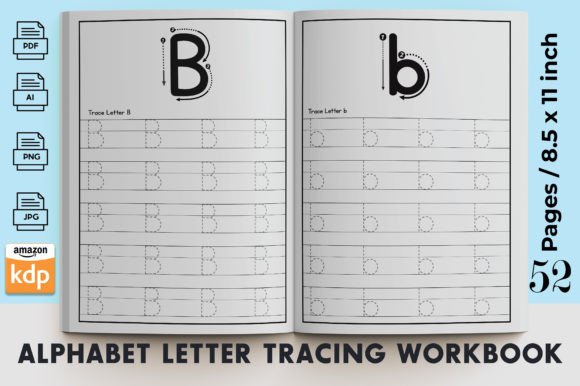
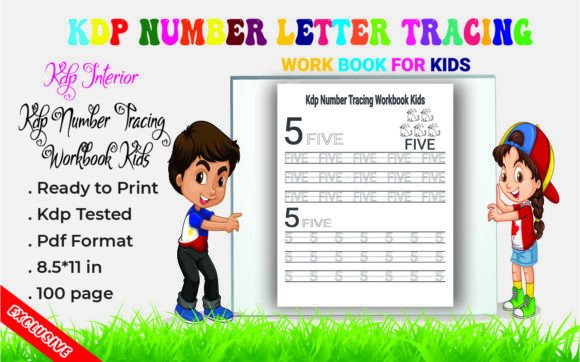
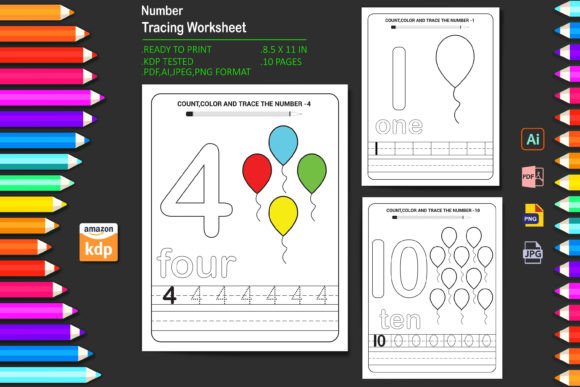
The core asset is a set of 10 black‑and‑white pages, formatted to 8.5×11 inches with no bleed. Each page focuses on one numeral, offering large traceable numbers, directional arrows, and space for independent practice. The file package includes a print‑ready PDF, 10 PNGs, 10 JPGs, and an editable AI source file. That mix of formats is intentional. The PDF goes straight to a home printer or KDP’s ingestion system without adjustments. The image files let you drop individual pages into lesson plans, digital planners, or app‑based learning tools. The editable AI file means you can customize stroke weight, add your own branding, or adapt pages for children with specific fine‑motor needs.
When you look at a 1-10 Number Tracing Prek Worksheet Page, it’s easy to see only the activity. But for the person preparing it — the parent laminating a sheet for repeated use, or the seller building a branded interiors bundle — it’s a component in a quality‑control chain. Each page was tested inside the Amazon Kindle Direct Publishing platform. That matters because KDP has specific requirements for margins, image resolution, and trims. Using an interior that has already passed those checks removes hours of trial and error.
Where Tracing Fits in Early Childhood Skill Sequences
Number recognition and pencil grip don’t develop in isolation. Most children follow a progression: they learn to identify numbers visually, then attempt gross‑motor air writing, then trace large models, and finally write numerals inside smaller spaces. The Preschool Tracing Number 1-10 Worksheet sits right in the middle of that journey. It bridges the gap between seeing a number and producing it independently. The high‑contrast, black‑and‑white design reduces visual distraction — important for young children who are still learning to filter sensory input. Because the pages avoid busy illustrations, the learner’s attention stays on the stroke direction and the target shape.
For educators and parents, this sequence matters when deciding what to offer before and after the tracing activity. Before using these sheets, a child might benefit from tactile number play — shaping numbers with playdough, tracing sandpaper numerals, or using a finger in a salt tray. That pre‑writing sensory input builds the mental map. Then the worksheet becomes the bridge to paper‑and‑pencil work. After several sessions with the tracing pages, a child can move to boxes, then single lines, then simple math problems that require writing digits. The worksheet isn’t a standalone event; it’s a deliberate middle step.
How KDP Publishers Can Make These Worksheets Work Harder
For low‑content and medium‑content creators, a 1-10 Number Tracing Prek Worksheet serves as more than a standalone interior. It becomes a versatile resource that can be repurposed across multiple formats. A single seller might use the 10‑page PDF as a complete number tracing book, bundle it with alphabet tracing pages into a larger preschool workbook, extract individual PNGs for a digital download shop, or add it as a bonus inside a membership area. Because the source files are provided, you’re not locked into a single output.
Practical implementation for KDP looks like this:
- Start from the tested PDF. Upload the print‑ready file directly to KDP’s paperback creator. Check the online previewer, but you shouldn’t need to adjust margins or sizing. The no‑bleed setting is already correct, so pages won’t get trimmed into the content.
- Expand with consistent formatting. Open the editable AI file. Study the font, line thickness, and layout grid. When you create additional pages — say, number words, counting exercises, or simple addition — copy the same margins and stroke styles. This visual consistency signals quality to buyers flipping through the “Look Inside” feature.
- Experiment with product variations. Use the PNGs to create a tablet‑friendly version for apps like GoodNotes or Notability. Some parents prefer reusable dry‑erase sleeves with physical sheets, so a single workbook can be marketed both ways. The JPGs are quick to drop into a PowerPoint or Google Slides lesson for online tutoring sessions.
Quality control is a recurring theme for KDP sellers. Every new interior you list carries a risk of formatting errors that lead to negative reviews. By starting with a file that’s already been validated on the platform, you shorten the testing cycle. You then focus creative energy on cover design, keyword research, and category selection rather than fixing trim issues.
Integrating Tracing Pages into a Daily Teaching or Parenting Routine
Teachers and homeschool parents are often juggling multiple goals: keeping a toddler occupied while an older sibling works, hitting early math standards, or documenting progress for a portfolio. The Preschool Tracing Number 1-10 Worksheet fits into tight windows of time without requiring elaborate setup. Print one page at breakfast. Slip it into a plastic sleeve and pair it with a dry‑erase marker for a car ride. Rotate the numbers across a week, introducing one new digit every day or two. Because the pages are black‑and‑white, the child can also color the number after tracing — combining fine‑motor practice with a creative reward.
From a process standpoint, it helps to treat the 10 sheets as a complete module with a clear beginning and end. Day 1: introduce the number one with the worksheet, a song, and a counting walk around the house. Day 2: review the number one tracing page quickly, then present number two. By day 10, the child has a stack of completed sheets and a tangible sense of progress. Many early learners respond well to this visible accumulation of work. You can staple the 10 pages into a simple booklet, adding a cover the child decorates, turning a set of isolated exercises into a cohesive finished product.
For educators working in mixed‑age settings, the editable AI file becomes especially useful. You can increase the tracing line thickness for younger children with less control, or decrease it for older preschoolers refining their grip. You might add a small dot at the starting point of each stroke instead of the standard arrow. These small customizations can make the difference between a child who engages with the activity and one who gets frustrated.
Organizing Digital Assets for Long‑Term Use
When you receive a multi‑format download — PDF, PNG, JPG, AI — the immediate instinct is to use the one you need and archive the rest. A better long‑term approach is to set up a folder structure that reflects how you’ll retrieve files later. For example:
- Print‑and‑Go – Contains the high‑resolution PDF for quick printing.
- Editable Master – Stores the AI file, with a copy converted to a format your preferred software can open if you don’t use Illustrator.
- Digital Assets – Holds PNGs and JPGs, named by number (e.g., “number‑1‑tracing.png”) so you can drag them into lesson plans without searching.
- KDP Listings – Keeps the exact file you uploaded, along with your cover design and keyword notes, so that any future update starts from the same source.
This minor organizational step prevents you from accidentally using a low‑resolution JPG when a print job requires a 300dpi PNG. It also helps when you circle back months later to create a sequel workbook. Consistent file naming and folder logic mean you’re not starting from scratch; you’re iterating on a proven base.
Interactions with Other Tools and Resources
A tracing worksheet doesn’t live in a vacuum. It works alongside handwriting apps, fine‑motor toys, and curriculum guides. When you pair the printed Preschool Tracing Number 1-10 Worksheet with a stylus‑based tablet app, you give the child both tactile and digital practice. Some families laminate the pages and use them with Play‑Doh or Wiki Stix to form numbers over the lines before ever picking up a pencil. That multi‑sensory approach respects different learning styles.
For content creators, these worksheets can be cross‑promoted with other early learning materials. A seller who lists the tracing book on KDP might also offer a free one‑page sample on a blog to build an email list. The same PNG files can become social media graphics showing a child’s hand holding a pencil over the worksheet — authentic, relatable marketing that performs well on platforms like Pinterest and Instagram. Because the sheets are black‑and‑white, they photograph cleanly without color balance issues.
In business terms, the product becomes a node in a larger ecosystem of educational printables. It can be packaged with cut‑and‑paste activities, counting mats, number coloring pages, or simple addition worksheets. The consistent 8.5×11 size and clean layout make it easier to combine multiple sources without a jarring shift in design quality.
Usability, Efficiency, and Avoiding Common Pitfalls
Small mistakes compound when you’re producing educational materials for sale or daily classroom use. One of the most frequent issues with number tracing interiors is misaligned stroke arrows. If the arrow points the wrong way or sits awkwardly close to the line, children mimic the error. Because this product was tested on KDP, those basics are already handled. Still, when you edit the AI file, take care to preserve the stroke direction logic. The numbers 4, 5, 8, and 9 are particularly prone to confusion. A quick check: trace each number yourself, in the order a child would, to verify the arrows guide a natural writing flow.
Another efficiency consideration: ink usage. These pages are black‑and‑white by design, which keeps printing costs low for families and classrooms. When you print a workbook for daily use, you want to avoid heavy color fills that drain ink cartridges. If you modify the interior, keep the fills light or none, and stick to line art. That constraint isn’t a limitation; it’s a feature that makes the product more practical for its target audience.
For KDP sellers, remember that the “no bleed” setting means the pages have a white border. That’s ideal for interior pages because it prevents content from getting cut during trimming. But you must maintain that intentional margin when you add to the file. If you stretch a line too close to the edge in the AI file, you risk a partial trim on some print runs. Always view any edited page at full trim size with bleed lines visible, even if you intend to keep no bleed as the final setting.
Long‑Term Durability and Reuse in Real Settings
A set of 10 tracing pages might seem like a one‑and‑done product, but in practice, it gets used repeatedly. Parents laminate the sheets and store them in a binder. Teachers slip them into plastic pockets and rotate them through a morning work station. Publishers update the listing with fresh covers or expanded page counts over multiple ASINs. The 1-10 Number Tracing Prek Worksheet for kids – KDP Interiors is really a template that can serve a household for months or a business for years.
To get the most from that long‑term reuse, treat the original purchased files as a master archive. Whenever you need a fresh copy, pull from that archive rather than a used print. Over time, laminating sheets get scratched, markers leave stains, and papers tear. The digital master ensures every new print is identical to the first, which is critical for children who rely on consistent visual cues like arrow placement. For business owners, maintaining an untouched master prevents the slow degradation that can happen when you repeatedly export, compress, and re‑save assets.
Making the Worksheet Part of a Larger Decision or Project
Choosing a number tracing resource often sits inside a bigger decision: “I’m starting a KDP business,” or “I need a complete preschool math setup.” The Preschool Tracing Number 1-10 Worksheet is not the entire solution, but it’s a reliable, tested component that reduces uncertainty. A parent can build an entire early math routine around these 10 sheets by adding counting manipulatives, songs, and real‑world number hunts. A publisher can use the interior as a foundation for a workbook series that covers 0‑20, skip counting, and basic addition, all in the same cohesive style.
In each case, the value isn’t just in the pages themselves but in how they connect to other actions. The PDF format ensures compatibility with virtually any home printer or print‑on‑demand service. The editable file means the resource grows with you, rather than becoming obsolete when your needs change. And the multi‑file package respects that you, as a professional or committed parent, work across different environments — sometimes printing, sometimes sharing screens, sometimes customizing.
The product’s quietest advantage is its format flexibility. Whether you’re inside a tight publishing workflow, a busy morning classroom, or a one‑on‑one learning session at the kitchen table, the asset shifts shape without losing its core function. That adaptability is what makes a simple set of 10 tracing pages a genuinely useful tool, far beyond a basic worksheet download.